Shower Leaking? Find Where the Water Comes From and Fix It
On a single-handle shower, a head that keeps dripping long after the handle is off usually has a worn valve cartridge. Turn off the water, take off the handle and trim, and swap the cartridge for the same brand and model. This Old House puts a plumber's job at $200 to $400; a compatible Moen cartridge costs around $15.

Different model, or still stuck? Describe it in Fixable and get every step for yours.
In this article
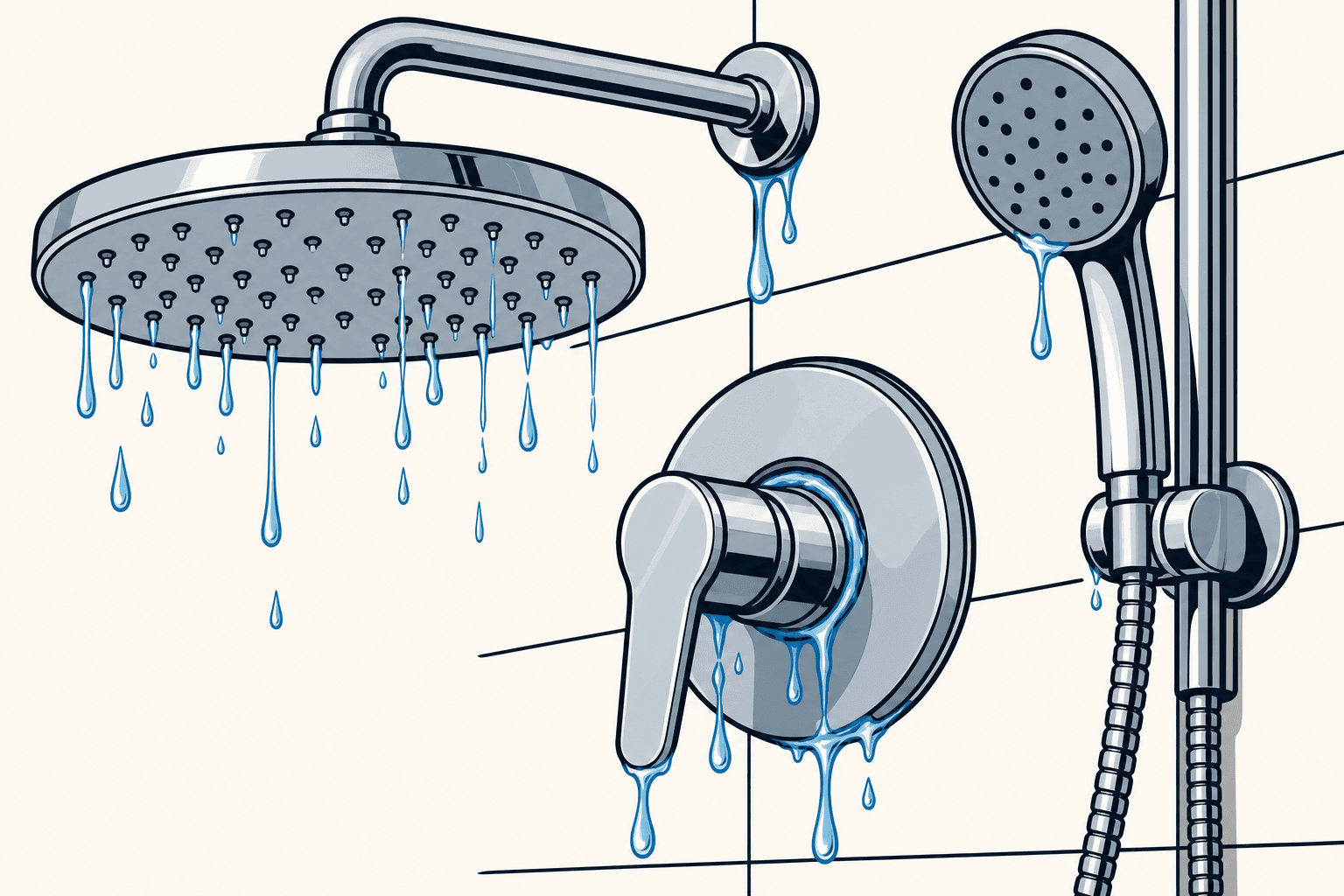
A leaking shower can mean different things: a head that keeps dripping long after you turn it off, water running out from behind the handle, a stain on the ceiling below, or a puddle outside the tub. Each one has its own cause, and most of them can be fixed with a few tools and one part.
So first find where the water comes from. A few drops from the head right after a shower are normal, because the water left in the arm and the head drains out. A steady drip minutes later points to the valve. Water you only see on a ceiling below points to the drain, the pipe behind the wall or the tiles.
Start With These Quick Checks
- 1Electric shower (a box on the wall that heats the water): if water drips from its box or near its cable, do not run it. Switch it off at its isolator and its breaker and go to fix 5.
- 2Turn the shower off firmly and wait five minutes. Drops that stop within a minute or two are just the head draining. A drip that keeps going points to the valve: its cartridge, or a washer if the shower has two handles.
- 3Watch the shower head while the water runs. Spray from the joint where the head meets the arm means a worn washer or old thread tape, not a valve problem.
- 4Look at the caulk where the tub or tray meets the wall, and around the handle plate. Gaps or black, peeling caulk let water run behind the wall every time you shower.
- 5If there is a room below, look at its ceiling. A stain that grows after showers points to the drain, the tiles or the caulk. A stain that grows even when nobody showers points to a supply pipe: close the main shutoff and call a plumber.
1. Head Drips After It Is Off: Replace the Cartridge
Most single-handle showers have a cartridge inside the valve that opens, closes and mixes the hot and cold water. Its rubber seals harden and wear over the years, and then the head keeps dripping: the classic dripping shower. Tightening the handle does not help; the cartridge has to come out. A shower with two handles has a washer and seat on each side instead; they wear the same way and are fixed like a dripping faucet, see the link below. Cartridges are made for one brand and often one series, so note the brand and model, or take the old one to the store. This Old House puts a plumber's cartridge job at $200 to $400. A compatible cartridge for the common Moen Posi-Temp valve sells for around $15; other brands vary.
Water off before the cartridge comes out
The cartridge holds back full water pressure. Turn the water off before you pull its clip or nut: some valves have their own small stops behind the trim plate, otherwise close the main shutoff and open a faucet on a lower floor to let the pressure out.
- 1Turn off the water to the shower, at the valve's own stops if it has them or at the main shutoff, then open the shower handle to let the pressure out.
- 2Put a towel in the tub so a dropped screw cannot go down the drain. Pop off the handle cap, remove the screw, pull the handle off and unscrew the trim plate.
- 3Take a photo of how the cartridge sits, then pull its retaining clip or unscrew its nut. Many Moen valves use a U-shaped clip. A stuck cartridge comes out with a puller tool made for that brand.
- 4Push the new cartridge in the same way round and refit the clip. Put the handle on loosely, open the water slowly and check that hot is hot and cold is cold. If they are swapped, turn the water off again and open the handle to let the pressure out before you pull the clip. Then take the cartridge out, turn it half a turn (Moen 1222) or as your brand's instructions show, push it back in, refit the clip and open the water again.
- 5Refit the trim plate and the handle, run the shower, turn it off and watch the head for five minutes.
The same kind of part wears out in sink faucets too, see how to fix a leaking faucet.
2. Leak at the Head or the Shower Arm
Water spraying from the connection, or a tiny jet next to the head, comes from the joint between the head and the arm. Water at the wall plate around the arm comes from the arm's thread inside the wall.
- 1Turn the shower off. Unscrew the head by hand, or with a wrench over a cloth so the finish does not scratch.
- 2Check the small rubber washer inside the head's nut. If it is flat, cracked or missing, replace it; hardware stores sell them in mixed packs.
- 3Clean the old tape off the arm's thread and wrap new thread seal tape around it three or four times, in the same direction you screw the head on.
- 4Screw the head back on hand tight plus a quarter turn and run the water.
- 5If water still comes out at the wall plate, unscrew the arm gently and re-tape its thread too. If the pipe behind the wall turns or moves while you do this, stop and call a plumber.
3. Water Running From Behind the Handle
Water that runs out around the handle while the shower is on means water is getting into the wall. It comes either from the cartridge's seals or from the edge of the trim plate. On an electric shower, water from around its knobs or its box is a different case: do not run it, see fix 5.
- 1Run the shower and watch where the water appears. Around the stem behind the handle means worn cartridge seals; at the edge of the plate means a failed gasket or caulk.
- 2A leak around the stem is a worn cartridge: turn the water off and replace it as in fix 1.
- 3A leak at the edge of the plate: turn the shower off, take the plate off and fit a new gasket, or run a thin bead of bathroom silicone around its edge.
- 4Check the caulk along the tub and the tiles while you are there. Cut out cracked or moldy caulk, let the joint dry for a day and lay a new bead.
4. Shower Drain Leaking Into the Ceiling Below
If the ceiling below only gets wet after a shower, and the head and the handle are dry, look at the drain. The seal between the drain and the tub or tray fails, and water runs down the outside of the pipe.
- 1If drain cleaner went in and water still stands, stop here and call a plumber; do not plunge, open the trap or take a hose off.
- 2Plug the drain, run about an inch of water into the tub or tray, and leave it for 15 minutes while someone watches the ceiling below.
- 3Then let the water out and watch again. A leak while the water stands points to the seal around the drain; a leak only while it drains points to the pipe joints under it.
- 4If both tests stay dry, run the shower against the walls only. A leak now points to the tiles, the grout or the caulk, not the drain.
- 5On many tubs the drain flange unscrews from above and can be bedded in fresh 100% silicone; plumber's putty can damage acrylic and plastic tubs. Pipe joints under the drain, a drain with no access from above, or one that still leaks need a plumber.
If the tray fills up while you shower, that is a slow drain, not a leak, see shower drain clogged with hair.
5. Shower Leaking From the Wall Unit
Some showers have the valve on the wall instead of behind it: a bar mixer with the pipes going into its ends, or a boxed electric shower that heats the water itself. If water already drips from under an electric shower's cover or near its cable, do not run it: switch it off at its isolator and its breaker and call an electrician. For a bar mixer, run the shower briefly and watch where the water appears before you take anything apart: at the nuts where the unit meets the wall pipes, or at the handle or the outlet.
Electric shower: power off, cover on
An electric shower heats the water with mains voltage inside its box. Never run it, touch it or open its cover while water leaks from it. Switch it off at its isolator switch or pull cord and turn off its breaker in the panel, then call an electrician or the maker's service.
- 1Turn it off before you touch it. Switch an electric shower off at its isolator switch or pull cord and turn off its breaker in the panel, and do not open its cover: the inside carries mains voltage. For a bar mixer, turn the water off at the small isolation screws in its wall pipes if it has them, otherwise at the main shutoff, then open the shower to let the pressure out.
- 2Water from under the cover of an electric shower, or near its cable: leave it switched off and call an electrician or the maker's service. Water and mains voltage in one box is not a DIY repair.
- 3Drips at the nuts where a bar mixer meets the wall pipes: undo one nut at a time over a towel, replace the washer inside it, and tighten it back by hand plus a quarter turn with a wrench over a cloth. If a wall pipe turns or moves, stop and call a plumber.
- 4Drips from the handle or the outlet of a bar mixer: the seals or the cartridge inside are worn. They are made for one brand and model, so note it before you buy, then swap them with the water off as in fix 1.
- 5Bar mixer only: open the water slowly and wipe every joint with a dry tissue. An electric shower stays off until the electrician has checked it. A wet tissue after a minute means that joint needs another look.
🛠️ Tools You Will Need
- •Screwdrivers and a hex key set - Handle screws and set screws
- •Adjustable wrench and a cloth - Shower head and arm without scratching the finish
- •Cartridge puller for your brand - Gets a stuck cartridge out without damaging the valve
- •Thread seal tape - Seals the shower arm's thread
- •Bathroom silicone - Trim plate edge, tub joints and the drain flange
- •Flashlight - Finding where the water appears
Pro tip
Check the maker's warranty before you buy a cartridge. Some brands replace worn cartridges free for the original owner, and their websites list the right part by model.
When to Call a Plumber
Some shower leaks are more than a weekend fix.
- 1A ceiling stain that grows even when nobody showers: a supply pipe under pressure is leaking. Close the main shutoff and call a plumber.
- 2Soft drywall, loose tiles or a musty smell next to the shower: water has been getting in for a while, and the wall needs to be opened.
- 3A cartridge that will not come out, or a corroded valve body: forcing it can twist the pipe inside the wall.
- 4A drip that continues after a new cartridge: the valve itself may be worn.
Fix it with AI
Describe what is happening and Fixable's AI finds the cause and gives you every step. Found a video for this? Paste the link and get the diagnosis, the tools and the parts, without scrubbing through the whole video.
Frequently asked questions
How much does it cost to fix a leaking shower?
A dripping head usually needs a new cartridge. This Old House puts a plumber's cartridge replacement at $200 to $400, while a compatible cartridge for the common Moen Posi-Temp valve costs around $15. Leaks from the drain or behind the wall cost more, because the wall or ceiling often has to be opened.
Can I replace a shower cartridge myself?
Usually yes, with a screwdriver, pliers and the right cartridge for your brand and model. Turn the water off first, at the valve's own stops or the main shutoff, and open the handle to let the pressure out. Plan about an hour the first time. A stuck cartridge needs the brand's puller tool, not force.
Why does my shower head drip for a while after I turn it off?
A few drops for a minute or two is the water left in the head and the arm draining out, and that is normal. A drip that keeps going five minutes later, or all night, means the valve does not close fully. With one handle that is usually a worn cartridge, with two handles a worn washer.
Is a leaking shower an emergency?
A dripping head is not, but it wastes water. Water on a ceiling below is more urgent: stop using that shower until you know where it comes from. A stain that grows when nobody showers means a leaking supply pipe, so close the main shutoff and call a plumber. Water from the box of an electric shower: switch it off at its isolator and breaker, and call an electrician.
STILL STUCK?
Describe what's broken and Fixable's AI finds the cause and gives you every step. Found a repair video? Paste the link. Or scan the type plate and Fixable answers from the manual, with the page.
Open it in your browser, free to try →Free trial · 6 languages · Cancel anytime
Keep Reading
No Hot Water in the House? 5 Causes, Easiest First
No hot water anywhere is usually power, gas or the pilot. Cold at one tap only is the faucet. Hot water that runs out fast is the tank. Here is how to tell which, and what you can safely check.
Mold in Shower Caulk? How to Get It Out and Keep It Away
Black spots in shower caulk are mold, and whether you can scrub them off depends on one thing: are they on the surface or inside the silicone? Here is how to tell, and how to stop them coming back.