Shower Drain Clogged With Hair? Clear It Without Chemicals
Hair bound with soap scum is the usual cause, and in most bathrooms it sits in the first six inches of pipe. Bail out any chemical drain opener first, wear gloves and eye protection, then push a $3 barbed zip tool down, twist and pull. That pull takes ten minutes. A still slow drain means a deeper clog.
In this article
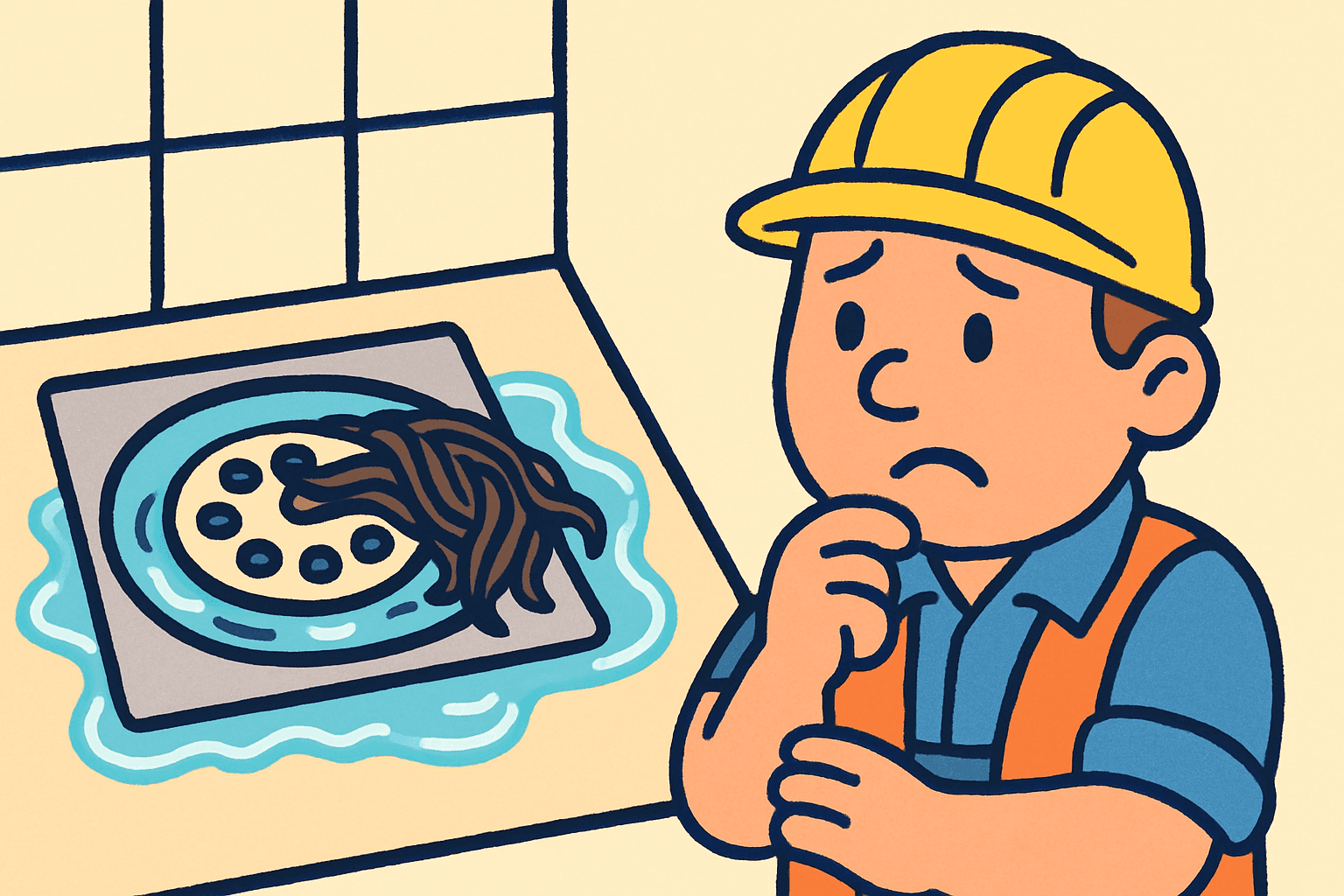
You are ankle deep in grey water halfway through a shower, watching the level creep up instead of down. Hair wrapped around the crossbars, soap and conditioner glued it into a felt plug. In most bathrooms that plug sits in the first six inches of pipe.
Before you buy anything: is it only the shower, or is the bathroom sink slow too? If the shower alone backs up, the clog is in the last few feet of pipe. If the sink is slow too, or the toilet bubbles while the shower empties, the blockage is further down the branch. A slow kitchen sink elsewhere is its own problem.
Start With These 60-Second Checks
Read this before you touch the drain
Caustic opener sits in the standing water and splashes back the moment you plunge or push a cable in. Do not run the tap to dilute it: on a drain that will not drain, that only lifts caustic water around your bare feet and over the lip onto the floor. Wear nitrile gloves and eye protection, bail it out with a cup into a bucket you can lid, and flush only once the line moves. Never mix products: an acid opener plus one containing bleach gives off chlorine gas.
- 1First, ask whether anyone poured a chemical drain opener in during the last day or two. If they did, or nobody is sure, treat the standing water as caustic: add nothing to it, put no hand and no tool in it. Gloves and eye protection on, bail it into a bucket you can lid, then run the rest of these checks.
- 2With the drain clear of opener, pour a bucket in and count. Under 30 seconds is healthy, one to three minutes is a partial clog, still standing after five is a full blockage.
- 3Take the strainer out and shine a phone light down. Nine times out of ten the hair mat is right there on the crossbar.
- 4If the shower still empties, run the bathroom sink for a minute and listen. Gurgling from the shower or the toilet points at a blocked vent, not at hair. Skip this check if water is standing: adding a second fixture to a blocked branch is how it ends up on the floor.
- 5Sniff the drain. A sour, swampy smell alongside slow water means biofilm on the pipe wall, and that smell has its own list of causes.
1. The Hair Mat Under the Strainer
Hair catches on the crossbar and on the seam two to six inches down, where soap and skin oil turn it into wet felt.
- 1Before you touch it: no chemical drain opener down this drain in the last day or two, and nobody unsure about it. If one has gone down, bail the standing water into a lidded bucket first, because a tool pushed into caustic water throws it back at your legs and face. Nitrile gloves and eye protection on either way.
- 2Remove the strainer. Most have two small Phillips screws. If there are none, grip the cap, turn it counterclockwise a quarter turn and lift.
- 3Push a plastic barbed drain tool, the flat 20 inch strip that costs about three dollars, down until it stops.
- 4Twist a half turn and pull it out slowly. The barbs face up, so they grab on the way back.
- 5Repeat four or five times. The second pull is usually the big one.
- 6Run hot water for two minutes and time it again. Back under 30 seconds means you are finished.
2. Hair Wrapped Around the Stopper Assembly
A lever, push cap or twist stopper means hardware inside the drain body, and the wad is usually wrapped under it rather than deep in the pipe.
- 1Same gate as the last section: no opener down this drain in the last day or two, standing water bailed into a lidded bucket, gloves and eye protection on before anything comes apart.
- 2On a stopper that lifts and turns, open it fully and look for a set screw in the knob. It takes a small hex key, most often 5/64 or 1/8. Back it out and lift the assembly free.
- 3On a push cap, hold the base and unscrew the cap counterclockwise by hand.
- 4On a tub with a trip lever, take the two screws out of the overflow plate and pull the linkage straight up, about ten inches of coated rod.
- 5Scrub it with an old toothbrush and dish soap, then refit. Hand tight only, brass brackets and plastic stoppers both strip easily.
3. A Wad Sitting in the P-Trap
The trap is the U bend 6 to 18 inches down, permanently full of water. The flat plastic strip will not round that bend, so it stops against something solid in a clear drain too. You are here when the strainer and stopper are clean, the strip has come back empty three or four times, and a bucket of water still takes over a minute to go down.
- 1Same gate again: no cable goes into standing water until you know no drain opener is in it and you have bailed the water into a lidded bucket. A spinning cable throws back whatever is in the pipe, and your face will be right over the drain. Gloves and eye protection on first.
- 2Get a hand drum auger, quarter inch cable, at least 25 feet on the reel, 25 to 35 dollars.
- 3Before you crank, find out what the pipe is. Heavy black pipe in an older house is cast iron: it rots thin from the inside, and a spinning cable punches through it into an open sewer under your floor. If you cannot tell, stop here.
- 4Feed the cable in by hand until it stops, tighten the thumb screw, then crank clockwise with light pressure. Never force it, cranking against a hard stop kinks the cable for good.
- 5When it breaks through, keep turning and run water. Retract slowly, still clockwise, so debris comes out with the cable.
- 6If the cable stops dead at the same depth every attempt, stop. From up here a hard bend, a fitting and compacted solids all feel the same, so get the line camera'd.
4. Soap Scum and Scale Narrowing the Pipe
A drain that was never fast, or that clogs a month after every cleaning, has lost bore to a grey soap and hard water crust that hair grips easily.
- 1Nothing acidic goes in first. If a chemical opener has been down this drain in the last day or two, vinegar on top of it reacts, and an opener containing bleach gives off chlorine gas. Bail the standing water into a lidded bucket, gloves and eye protection on, before you pour.
- 2Pour two cups of plain white vinegar in, cover the drain, leave it 30 minutes. Do not chase it with baking soda: the two cancel out.
- 3Flush with the hottest water your tap gives, not a kettle. Boiling water softens plastic joints and marks an acrylic pan.
- 4For real scale use an enzyme drain cleaner, about 15 dollars. Pour it at bedtime and leave the water off six hours.
- 5Repeat monthly for three months. One bottle does not undo three years of buildup.
5. A Blocked Vent or Branch Line (Where You Stop)
If the toilet bubbles when the shower drains, the blockage is past the reach of a 25 foot cable: either the vent stack or the branch downstream. If a sink on the same run is slow too, the blockage is shared and a clogged kitchen sink has the method for the branch line. If the drain clears but the smell stays, that is the rotten egg smell, a different cause.
- 1Confirm it. Run only the shower and watch the toilet bowl. Movement there means air is being pulled through the toilet trap because the vent cannot supply it.
- 2Do not go up on the roof to look or to clear it. A wet or steep roof is a fall risk, and a plumber does this off a ladder rated for the job.
- 3From the ground, look up at the vent stack. Leaves, a nest or an ice cap in winter block it, often visibly.
- 4Call a licensed plumber. Machine cleaning a branch runs 150 to 350 dollars, and a camera inspection adds 200 to 400.
🛠️ Tools You Will Need
- •Plastic barbed drain tool ($3) - hooks the hair mat out of the first 20 inches
- •Phillips screwdriver and a small hex key set (5/64 to 1/8) - strainer screws, plus the set screw under a lift and turn stopper, where sizes vary
- •Hand drum auger, 25 ft ($25 to $35) - goes round the trap bend, which the plastic strip cannot
- •Enzyme drain cleaner ($15) - digests the soap film new hair sticks to, safe on plastic and septic
- •Hair catcher for the strainer ($12) - the only item here that stops it happening again
- •Nitrile gloves, eye protection, bin bag - wear them for every step above, not just the messy ones
Fix it with AI
Describe what is happening and Fixable's AI finds the cause and gives you every step. Found a video for this? Paste the link and get the diagnosis, the tools and the parts, without scrubbing through the whole video.
Frequently asked questions
How much does it cost to unclog a shower drain full of hair?
Almost nothing, if it is the hair mat. A plastic barbed zip tool is about three dollars, a 25 foot hand drum auger is 25 to 35 dollars, and enzyme cleaner is roughly 15. A plumber who machine cleans a shower branch charges 150 to 350 dollars, plus 200 to 400 for a camera.
Can I do this myself or is this a plumber job?
Clearing the strainer and stopper is a beginner job, on one condition: no chemical opener went down this drain in the last day or two. Bail that out first, gloves and eye protection on. Running a cable into the trap is a step up: it can punch through old cast iron. Call a plumber if a second fixture backs up.
How long before the hair clog comes back?
Expect it back in six to twelve months in a household with long hair, sooner if two people share the shower. A hair catcher over the strainer, emptied weekly, pushes that out to years. An enzyme dose once a month keeps soap scum from binding new hair to the pipe wall.
My shower drain cover has no screws and will not lift out. How do I get it off?
First, make sure no chemical drain opener went down in the last day or two, and bail any standing water into a lidded bucket. Gloves and eye protection on. Then turn the cap counterclockwise and lift. If stuck, pry gently under the rim with a flathead. Some hide a 5/64 or 1/8 hex set screw under the knob.
STILL STUCK?
Describe what's broken and Fixable's AI finds the cause and gives you every step. Found a repair video? Paste the link. Or scan the type plate and Fixable answers from the manual, with the page.
Open it in your browser, free to try →Free trial · 6 languages · Cancel anytime
Keep Reading
Water Heater Leaking? What to Shut Off First, Then 5 Causes
Water on the floor by the heater usually comes from a fitting, not the tank. Only one of the five causes means a new heater. Here is how to tell which one you have in 30 minutes.
Kitchen Sink Clogged? 6 Fixes Before You Reach for Drain Cleaner
Most kitchen sink clogs are a plug of cold grease sitting in the trap under the cabinet, about 18 inches below the drain. Six fixes, in the order a plumber actually tries them.