Mold in Shower Caulk? How to Get It Out and Keep It Away
Mold in shower caulk can be scrubbed off only while it sits on the surface. If the black spots are inside the silicone, no cleaner reaches them: cut the old caulk out, let the joint dry, and lay a new bead of mildew-resistant silicone. Run the bathroom fan during and after every shower to keep it away.

Different model, or still stuck? Describe it in Fixable and get every step for yours.
In this article
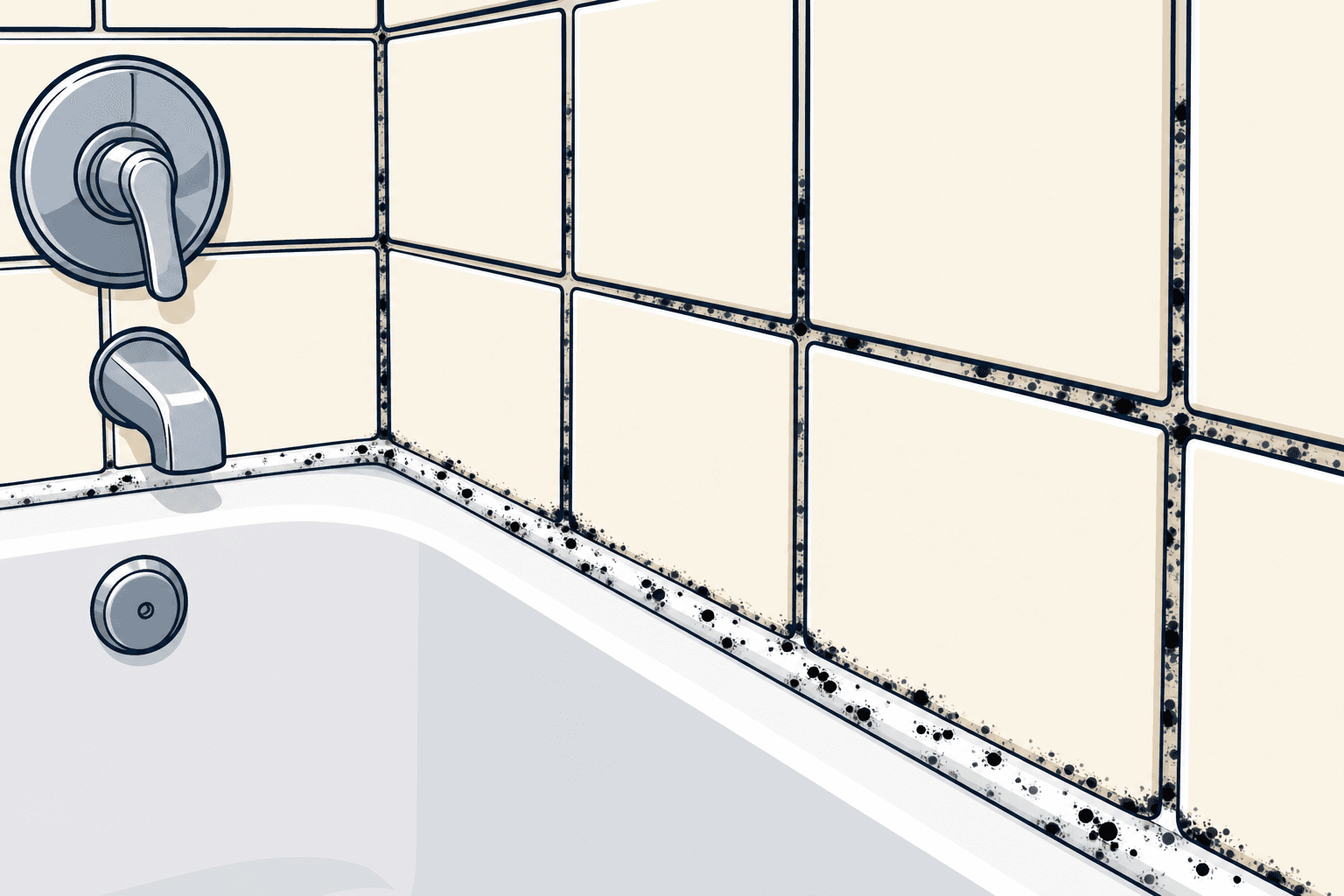
Mold in the shower usually shows up first where the caulk meets the tub or the tray: a line of black or grey dots that comes back no matter how often you clean. That is not a sign of a dirty home. Caulk sits in the wettest spot of the bathroom, and mold only needs moisture, warmth and a little soap film.
One test decides what to do. Rub a spot with a damp cloth and a bathroom cleaner. If it wipes off, the mold sits on the surface and cleaning is enough. If it stays, look closely: dots under the surface of the silicone mean the mold has grown into it, and no cleaner gets it out.
Protect yourself first
For mold cleanup the EPA advises gloves and goggles without vent holes, and an N-95 mask if you want one; open a window or run the fan. Never mix bleach with ammonia or other cleaners, the fumes are toxic. If more than about 10 square feet is moldy, the EPA points to its guide for professional cleanup.
Start With These 1-Minute Checks
- 1Do the wipe test on three or four spots, wearing gloves.
- 2Press the caulk with a fingernail. Caulk that is soft, peeling or pulling away from the tile lets water behind it and has to be replaced anyway.
- 3Press the tiles and the wall next to the shower. Soft drywall, loose tiles or a musty smell outside the shower mean water is getting into the wall; see shower leaking for where it comes in.
- 4Hold a single sheet of tissue against the bathroom fan while it runs. If the fan cannot hold it, it moves too little air to dry the room.
1. Spots on the Surface: Scrub and Dry
The EPA's advice for hard surfaces is simple: scrub the mold off with detergent and water, and dry it completely. A stronger cleaner helps with stains, but the scrubbing does the work.
- 1Put on gloves and goggles, and open a window or switch on the fan.
- 2Wet the caulk and the grout with warm water and a little dish detergent, and scrub with a stiff nylon brush or an old toothbrush. Skip the wire brush: it scratches the caulk, and mold grows into the scratches.
- 3For stains that stay, use a bathroom mold and mildew cleaner exactly as its label says, with the fan on. Never mix it with another cleaner.
- 4Rinse with clean water and dry the joint with a towel.
- 5Leave the shower door or curtain open and the fan running until the corner is fully dry.
2. Moldy Grout: Scrub, Dry, Seal
Grout is porous, so mold sits a little deeper there than on the caulk. In most showers it still cleans up, and a sealer slows it down afterwards.
- 1Gloves and goggles on, fan running.
- 2Scrub the grout lines with detergent and water and a narrow grout brush, along the line rather than across it.
- 3For dark stains, use the bathroom mold and mildew cleaner as its label says, then rinse and dry.
- 4Let the grout dry completely with the shower out of use, then brush on a penetrating grout sealer and follow its label for the curing time.
- 5Grout that crumbles, has cracks or stays dark after cleaning needs to be raked out and replaced. That is a bigger job, or one for a tile pro.
3. Mold Inside the Caulk: Cut It Out and Recaulk
Silicone caulk is soft, and once mold has grown into it, it stays there. The only fix is new caulk, and for most people it is an afternoon of work plus the curing time printed on the tube.
- 1Do not use the shower for a day before, so the joint is dry.
- 2Cut along both edges of the old bead with a utility knife or a plastic caulk remover, at a shallow angle so the blade does not scratch the tub. Pull the bead out in strips.
- 3Scrape off the last bits and wipe the joint with rubbing alcohol on a cloth. Silicone residue stops the new caulk from sticking.
- 4If mold sits on the tile or the tub edge under the old bead, clean it as in fix 1 and let the joint dry completely. The EPA says not to caulk over mold.
- 5Put painter's tape on both sides of the joint, cut the nozzle small, and lay one steady bead of 100% silicone labeled for kitchen and bath, with mildew resistance on the label.
- 6Smooth the bead with a wet finger or a caulk tool, pull the tape off right away, and keep the shower dry for the full curing time on the tube. If you are not sure, wait 24 hours.
Pro tip
On a bathtub, fill the tub with water before you caulk and leave it full until the caulk has cured. The weight pulls the tub down to where it sits when someone stands in it, so the new bead does not tear the first time the tub is used.
4. Keep Mold From Coming Back
Mold needs moisture. Take the moisture away and new caulk stays white much longer.
- 1Run the bathroom fan during every shower and for about 20 to 30 minutes after.
- 2Squeegee the walls and wipe the corner of the tray after the last shower of the day.
- 3Keep indoor humidity below 60 percent, ideally between 30 and 50 percent, the range the EPA gives. A small hygrometer shows where you are.
- 4Leave the door and the shower curtain open after showering, and wash a fabric curtain or liner regularly.
- 5Fix drips. A shower head that drips all night keeps the tray wet. The same damp air also lifts bathroom paint, see peeling paint.
🛠️ Tools You Will Need
- •Utility knife or plastic caulk remover - cuts the old bead out without scratching the tub
- •Caulk gun - lays one steady bead
- •100% silicone kitchen and bath caulk, mildew resistant - holds up to water and resists new mold
- •Painter's tape - gives a straight, clean edge
- •Rubbing alcohol and a cloth - removes the silicone residue so the new bead sticks
- •Stiff nylon brush, gloves and goggles - scrubbing surface mold safely
5. When to Call a Pro
Caulk and grout are owner jobs. Mold that goes beyond them is not.
- 1The mold covers more than about 10 square feet, the size above which the EPA points to its guide for professional cleanup.
- 2Soft drywall, loose tiles, or mold on the ceiling or in the next room: water is getting into the wall, and the wall has to be opened.
- 3Mold comes back within weeks even with a working fan and new caulk: look for a leak behind the wall.
- 4Someone in the home has asthma, allergies or a weak immune system and would have to do the cleaning.
Fix it with AI
Describe what is happening and Fixable's AI finds the cause and gives you every step. Found a video for this? Paste the link and get the diagnosis, the tools and the parts, without scrubbing through the whole video.
Frequently asked questions
How much does it cost to recaulk a shower?
Doing it yourself costs little: Angi puts the caulk at a few cents per foot plus $10 to $30 for tools like a caulk gun and a remover. A professional tub or shower caulking job runs about $65 to $300, according to Angi. Mold behind the tiles or in the wall costs far more.
Is black mold in the shower dangerous?
The EPA says molds can cause allergic reactions and asthma attacks in sensitive people, and that you do not need to test which type it is. A small patch in the caulk is a normal cleaning job for most healthy adults. People with asthma, allergies or a weak immune system should leave it to someone else.
Why does my shower caulk keep getting moldy?
Because it stays wet. A bathroom fan that moves too little air, a shower head that drips, water standing in the corner of the tray, or caulk laid over old mold or onto a damp joint all bring it back. Fix the moisture first, then new caulk stays clean much longer.
Can I put new caulk over the moldy caulk?
No. The EPA says not to paint or caulk over moldy surfaces, and new silicone does not stick to old silicone anyway. Cut the old caulk out completely, clean the joint, let it dry fully, then lay the new bead.
STILL STUCK?
Describe what's broken and Fixable's AI finds the cause and gives you every step. Found a repair video? Paste the link. Or scan the type plate and Fixable answers from the manual, with the page.
Open it in your browser, free to try →Free trial · 6 languages · Cancel anytime
Keep Reading
No Hot Water in the House? 5 Causes, Easiest First
No hot water anywhere is usually power, gas or the pilot. Cold at one tap only is the faucet. Hot water that runs out fast is the tank. Here is how to tell which, and what you can safely check.
Shower Leaking? Find Where the Water Comes From and Fix It
A leaking shower is one of five things: the head, the handle valve, the drain, the walls or a valve mounted on the wall. A few simple checks tell you which, and the most likely one is a part you can swap yourself.