Toilet Leaking at the Base? Here's the Fix
A toilet leaking at the base often has a failed wax ring, but rule out the supply line, the tank and condensation first. If water seeps from under the bowl after a flush, replace the ring: shut off the water, empty the tank, lift the toilet with a helper and set it on a new ring of about $5.

Different model, or still stuck? Describe it in Fixable and get every step for yours.
In this article
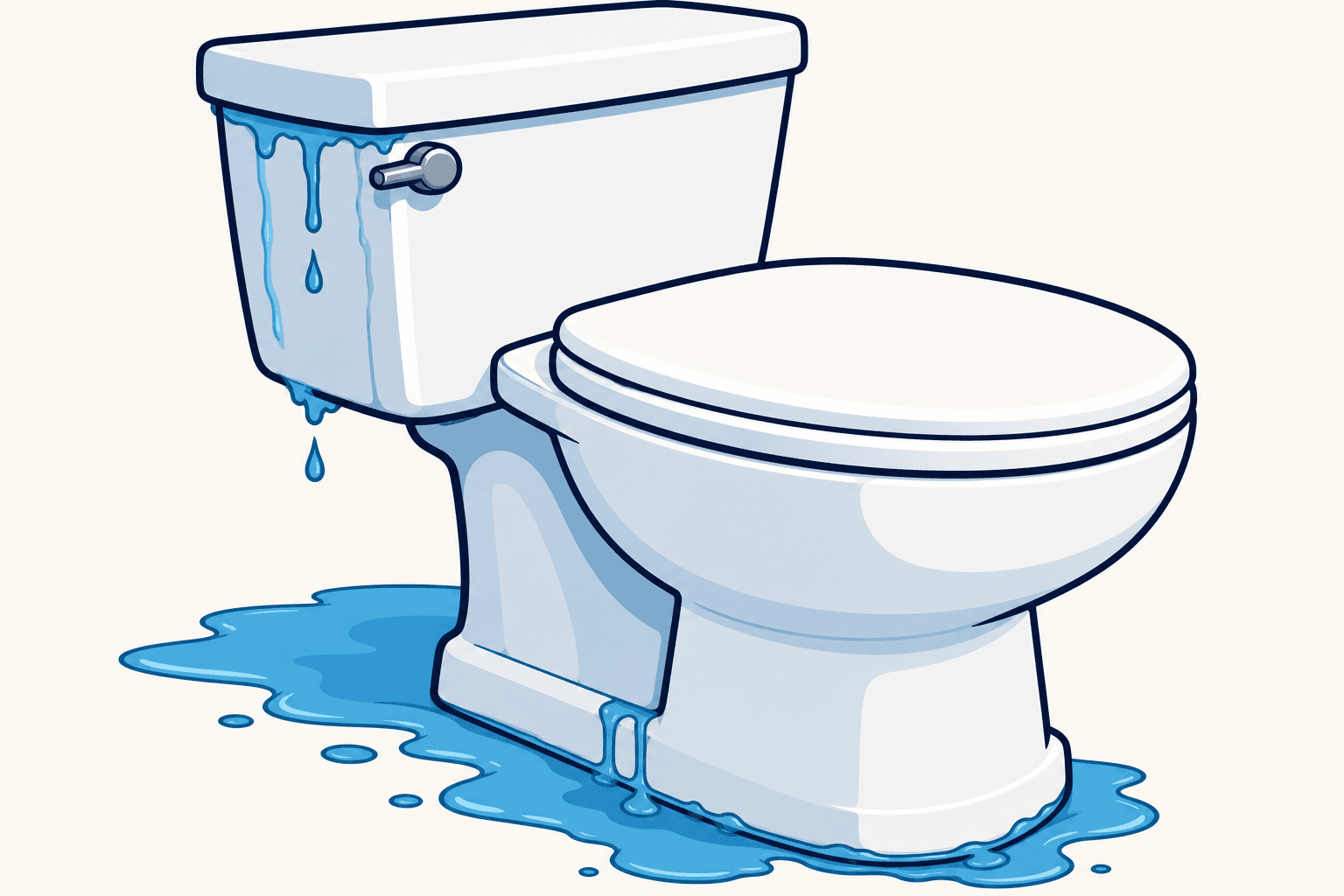
A toilet leaking at the base leaves a puddle that keeps coming back, and over time it can rot the floor underneath. But the water does not always come from under the toilet. It can drip from the tank, from the supply hose, or run down the outside of a sweating tank in humid weather.
So the question is when the water appears. Only right after a flush points to the wax ring under the bowl, or to the gasket between the tank and the bowl. All the time, even when nobody uses the toilet, points to the tank or the supply line. Only on humid days, with beads of water on the outside of the tank, points to condensation.
Start With These Quick Checks
- 1Dry the floor and the whole toilet with a towel, then put a few drops of food coloring in the tank. Do not flush.
- 2Wait 30 minutes. Colored water on the floor means the tank or its bolts leak.
- 3Run your fingers along the supply hose and its nuts at the wall valve and at the tank. A wet nut is the easiest fix of all.
- 4Now flush and watch with a flashlight. Drips from between the tank and the bowl point to the tank gasket; water that seeps out from under the bowl after the flush points to the wax ring.
- 5On a humid day, feel the outside of the tank. A tank covered in droplets is sweating, not leaking.
1. A Loose or Leaking Supply Line
The flexible hose from the wall valve to the bottom of the tank is under pressure all the time. A slow drip from either nut runs down and pools at the base, where it looks just like a base leak.
- 1Close the wall valve by turning it clockwise, flush to empty the tank, and put a towel under the hose.
- 2Tighten the plastic nut at the tank by hand, plus a quarter turn; it cracks if you force it. Tighten the nut at the valve a quarter turn with a wrench.
- 3If the hose is kinked, rusty or wet along its length, replace it with a new braided toilet supply line of the same length.
- 4Open the valve slowly, dry the nuts and check them again with a paper towel after an hour.
2. Tank Bolts or the Tank Gasket
On a two-piece toilet the tank sits on the bowl on a large rubber gasket and is held by two or three bolts. When the gasket hardens or a bolt washer fails, water drips from under the tank every time it refills.
- 1Close the wall valve, flush and hold the handle down to empty the tank, then sponge out the last of the water.
- 2Look under the tank at the bolts. Rust or drips there mean their washers have failed.
- 3Tighten the nuts a little at a time on each side while you hold each bolt head inside the tank with a screwdriver. Stop when the tank no longer rocks: overtightening cracks the porcelain.
- 4If it still drips, replace the bolts and the gasket together with a kit made for your toilet's model. Disconnect the supply line, take the nuts off, lift the tank off and fit the new parts.
- 5Refit the tank, reconnect the supply line, open the valve slowly and check for drips.
3. Replace the Wax Ring (Water From Under the Bowl)
The wax ring seals the toilet's outlet to the drain flange in the floor. When the toilet rocks, or the ring is old, the seal breaks and a little water escapes with every flush. A sewer smell in the bathroom is often another sign. HomeAdvisor puts a wax ring replacement by a pro at about $50 to $200; the ring itself costs around $5.
Lift with a helper and plug the drain
A toilet is heavy, and the porcelain cracks if it drops or hits the floor. Lift it with a second person. While it is off, stuff an old rag into the open drain to block sewer gas and catch dropped bolts, and take the rag out before you set the toilet back.
- 1Close the wall valve, flush and hold the handle to empty the tank, sponge out the bowl and the tank, and disconnect the supply line.
- 2Pop off the bolt caps and remove the two nuts at the base. Rock the toilet gently to break the old seal, then lift it straight up with your helper and set it on an old towel. Stuff an old rag into the open drain right away.
- 3Scrape the old wax off the flange and the toilet's outlet with a putty knife. If the flange is cracked, loose or sits well below the floor, stop here: it needs a repair ring or a plumber.
- 4Put the new wax ring on the flange or on the toilet's outlet, as its package says. Take the rag out and lower the toilet straight down onto the bolts without sliding it.
- 5Press the bowl down with your body weight, then tighten the nuts a little at a time on each side until they are snug. If the toilet still rocks, slide plastic shims under the low side instead of tightening harder, or the porcelain can crack. Reconnect the supply line, open the valve slowly and flush a few times while you watch the base.
4. Condensation on the Tank
In humid weather the cold water in the tank makes its outside sweat. The drops run down and collect at the base, and it looks exactly like a leak, but nothing is broken.
- 1Wipe the tank dry and check it again after an hour on a humid day. Beads all over the tank mean condensation.
- 2Run the bathroom fan during and after showers, or use a dehumidifier, to lower the humidity.
- 3An insulation kit glued inside the tank keeps the cold water from chilling the outside.
- 4A toilet that keeps refilling sweats more, because cold water keeps coming in. Fix that first, see toilet runs by itself.
5. A Crack in the Bowl or the Tank
A hairline crack in the porcelain can seep water slowly. Look closely at the base of the bowl and the sides of the tank with a flashlight. A crack below the water line cannot be repaired reliably: that piece, or the whole toilet, gets replaced.
🛠️ Tools You Will Need
- •Adjustable wrench - Supply line nut and the nuts at the base
- •Putty knife - Scraping old wax off the flange
- •New wax ring with bolts - The seal between toilet and drain
- •Sponge, towels and an old rag - Emptying the toilet and plugging the drain
- •Food coloring and a flashlight - Finding where the water comes from
- •Plastic toilet shims - Steadying a toilet that still rocks
Pro tip
If you caulk around the base, leave a small gap at the back. Should the seal ever fail again, the water shows up there instead of soaking the floor unseen.
When to Call a Plumber
Get help when the problem goes past the toilet itself.
- 1The floor around the toilet feels soft or spongy: the subfloor may be rotting.
- 2The flange is broken, rusted or set too low, which is common with old cast iron drains.
- 3The base still leaks after a new wax ring.
- 4Other drains back up or gurgle when you flush: the clog or the fault is in the main line.
Fix it with AI
Describe what is happening and Fixable's AI finds the cause and gives you every step. Found a video for this? Paste the link and get the diagnosis, the tools and the parts, without scrubbing through the whole video.
Frequently asked questions
How much does it cost to fix a toilet leaking at the base?
A new wax ring costs around $5, and a supply line or a tank bolt kit not much more. HomeAdvisor puts a wax ring replacement by a pro at about $50 to $200, and toilet leak repairs in general at $100 to $600.
Can I replace a toilet wax ring myself?
Yes, if you can lift the toilet with a helper. Close the wall valve, empty the tank and the bowl, disconnect the supply line and take off the two nuts. Set the toilet straight down on the new ring, tighten the nuts only until snug and shim it if it still rocks, or the porcelain can crack.
Why is my toilet leaking from the bottom only when I flush?
A leak that shows up only after a flush comes from one of two places. Look with a flashlight right after flushing: drips from between the tank and the bowl mean a worn tank gasket, water seeping out from under the bowl means the wax ring.
Is a toilet leaking at the base dangerous?
Not right away, but water from under the bowl comes from the drain, so clean it up with gloves and a disinfectant. Left alone, a leak under a toilet can rot the subfloor and grow mold where you cannot see it. A floor that feels soft around the toilet needs a plumber or a contractor.
STILL STUCK?
Describe what's broken and Fixable's AI finds the cause and gives you every step. Found a repair video? Paste the link. Or scan the type plate and Fixable answers from the manual, with the page.
Open it in your browser, free to try →Free trial · 6 languages · Cancel anytime
Keep Reading
No Hot Water in the House? 5 Causes, Easiest First
No hot water anywhere is usually power, gas or the pilot. Cold at one tap only is the faucet. Hot water that runs out fast is the tank. Here is how to tell which, and what you can safely check.
Mold in Shower Caulk? How to Get It Out and Keep It Away
Black spots in shower caulk are mold, and whether you can scrub them off depends on one thing: are they on the surface or inside the silicone? Here is how to tell, and how to stop them coming back.