Toilet Runs by Itself? 5 Fixes Without Calling a Plumber
A toilet that runs by itself is almost always a worn flapper, the rubber disk at the bottom of the tank. A universal replacement costs $5 to $10 and takes about 10 minutes with the water shut off. Confirm it first: put food coloring in the tank, wait 15 minutes, then check the bowl.
In this article
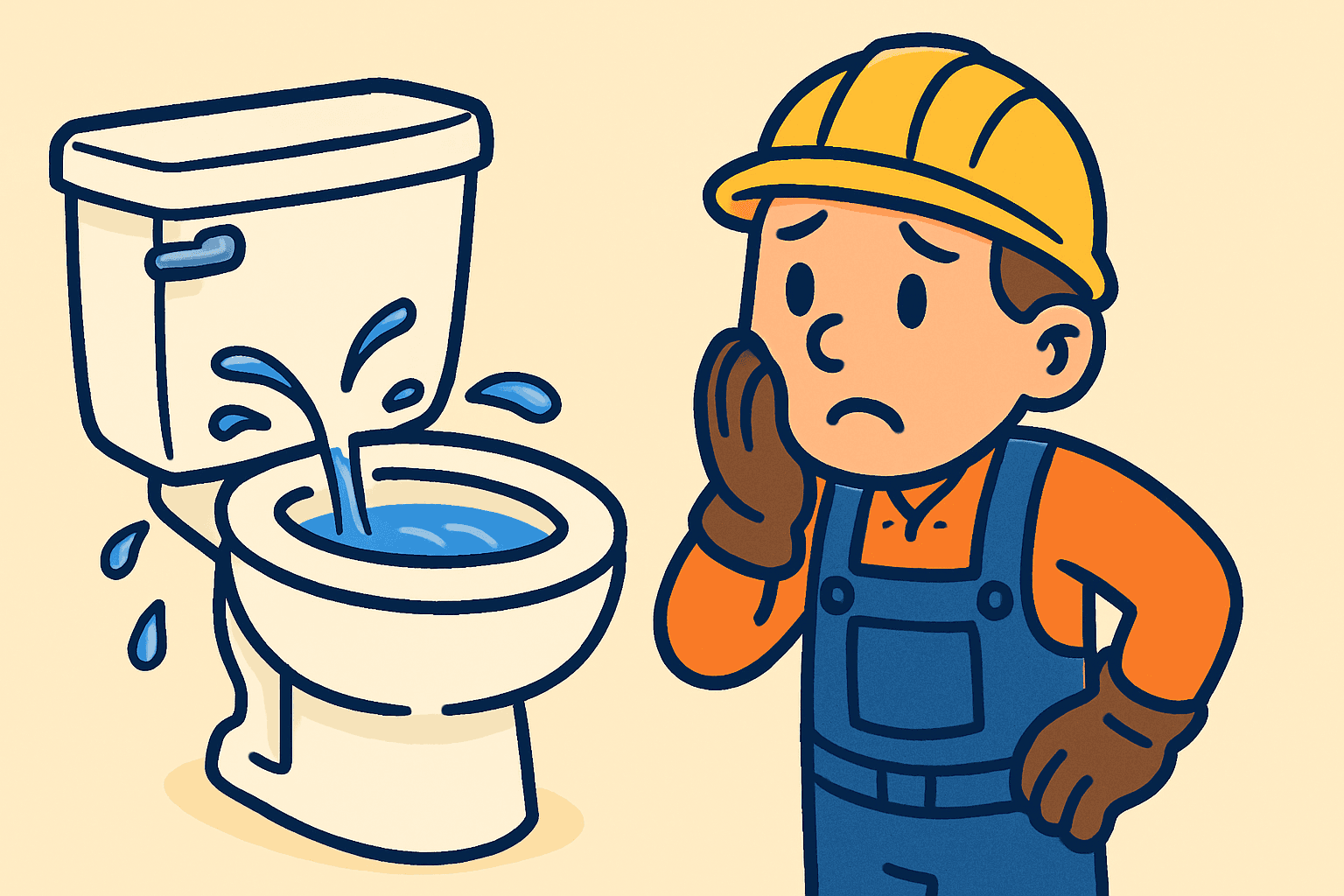
You walk past the bathroom and hear water trickling. The toilet has not been flushed in an hour, but it keeps refilling on its own. This is called a phantom flush, and it means a small part inside the tank is not sealing properly. Water leaks from the tank into the bowl, the float drops, and the fill valve kicks on to top it back up. Forever.
The fix is usually under $15 and 10 minutes of work. The trick is figuring out which of the five common parts is the culprit. Lift the tank lid (set it gently on a folded towel, porcelain chips easily) and start with the quick checks.
Start With These 30-Second Checks
- 1Drop a few drops of food coloring into the tank water. Wait 15 minutes without flushing. If the color shows up in the bowl, the flapper is leaking.
- 2Look at the chain connecting the flush handle to the flapper. Too tight = flapper held slightly open. Too loose = flapper does not seat right.
- 3Check the water level. It should sit about 1 inch below the top of the overflow tube. Higher = float misadjusted.
- 4Listen at the fill valve (the tall vertical part). A constant hiss means the valve is not shutting off.
1. Replace the Flapper
The flapper is the rubber disk that lifts when you flush. Over 2-5 years it warps, hardens, or gets coated with mineral scale and stops sealing. This is the cause in roughly 70% of running-toilet cases.
- 1Shut the water valve behind the toilet (turn clockwise until tight).
- 2Flush the toilet to empty the tank.
- 3Unclip the chain and slide the old flapper off the two pegs on the overflow tube.
- 4Take it to the hardware store to match. Universal flappers from Korky or Fluidmaster fit 95% of toilets and cost $5-10.
- 5Snap the new one on, clip the chain back with about a half-inch of slack, turn the water back on, and let the tank fill.
Test the seal
After installing the new flapper, redo the food coloring test. No color in the bowl after 15 minutes = success.
2. Adjust the Chain
If the chain is too short, it lifts the flapper slightly even when the handle is at rest. If it is too long, it tangles under the flapper and props it open. Either way, water leaks.
- 1Hold the flapper closed by hand and pull the chain taut.
- 2It should have about half an inch of slack when the handle is at rest. Any more = water can lift the flapper.
- 3If too long, move the clip up one or two links.
- 4If tangled, swap the chain for a beaded one from the hardware store. Beads do not knot.
3. Lower the Float
If the water level is above the overflow tube, water continuously spills into the tube and down into the bowl. The fill valve never stops because the tank never reaches the proper level. The fix is to lower the float so the valve shuts off earlier.
- 1Find the float. Older toilets have a ball float on a rod. Newer ones have a cylinder float that slides on the fill valve shaft.
- 2For ball floats, gently bend the rod down or turn the adjustment screw counterclockwise.
- 3For cylinder floats, pinch the metal clip and slide the float down on the shaft.
- 4Aim for a water level about 1 inch below the top of the overflow tube. Flush to test.
4. Replace the Fill Valve
If the fill valve hisses constantly or refuses to shut off even with the float lowered, the valve seal inside is worn out. Replacing the whole valve is easier than trying to rebuild it, and a Fluidmaster 400A costs about $12.
- 1Shut off the water and flush to empty the tank. Sponge out any remaining water.
- 2Unscrew the water supply line from underneath the tank (you may need a wrench).
- 3Unscrew the plastic locking nut underneath that holds the fill valve in place.
- 4Lift the old valve out, drop the new one in, and reverse the steps.
- 5Adjust the height of the new valve so its top is at least 1 inch above the overflow tube before tightening.
Drain the supply line
Even with the shutoff valve closed, the supply hose holds water. Have a towel ready when you disconnect it.
5. Replace the Flush Valve (Last Resort)
If the flapper, chain, float, and fill valve are all fine but the toilet still runs, the flush valve itself (the tall part with the overflow tube and flapper seat) might be cracked or warped. This is rare but happens in toilets older than 20 years.
- 1Confirm with food coloring: color leaks past a brand-new flapper = bad valve seat.
- 2Replacement requires removing the tank from the bowl. Two bolts underneath.
- 3Buy a flush valve kit ($15-20) that matches your toilet's drain hole size (usually 2-inch or 3-inch).
- 4This one is borderline. If you are not comfortable lifting the tank, a plumber will charge $150-200 for the same fix.
🛠️ Tools You Will Need
- •Universal flapper ($5-10) - the most common single fix
- •Beaded chain ($3) - replaces tangled link chains permanently
- •Fluidmaster 400A fill valve ($12) - drop-in replacement for 90% of toilets
- •Food coloring - diagnoses the flapper leak in 15 minutes
Fix it with AI
Describe what is happening and Fixable's AI finds the cause and gives you every step. Found a video for this? Paste the link and get the diagnosis, the tools and the parts, without scrubbing through the whole video.
Frequently asked questions
How much does it cost to fix a toilet that keeps running?
The parts are cheap. A universal flapper is $5 to $10, a beaded chain about $3, and a Fluidmaster 400A fill valve roughly $12. A complete flush valve kit runs $15 to $20. A plumber charges $150 to $200 for the same work, almost all of it labor.
Can I do this myself or should I call a plumber?
Swapping the flapper, chain, float, or fill valve is a beginner job and needs no special tools. Call a plumber if the shutoff valve behind the toilet is seized or drips when you turn it, or if the repair means lifting the tank off the bowl and you would rather not.
How long will a new flapper last before the toilet starts running again?
Most flappers last 2 to 5 years before the rubber hardens or mineral scale builds up on the seat. In-tank chlorine tablets shorten that considerably because chlorine attacks the rubber. If a brand new flapper leaks again within a few weeks, the flush valve seat underneath it is usually worn.
My toilet only runs for 20 seconds every half hour. Is that the same problem?
Usually yes. That is a slow flapper leak: water seeps into the bowl, the level drops an inch or so, and the fill valve tops it back up. Run the food coloring test and give it the full 15 minutes, since a slow leak takes longer to show color than a fast one.
STILL STUCK?
Describe what's broken and Fixable's AI finds the cause and gives you every step. Found a repair video? Paste the link. Or scan the type plate and Fixable answers from the manual, with the page.
Open it in your browser, free to try →Free trial · 6 languages · Cancel anytime
Keep Reading
Water Heater Leaking? What to Shut Off First, Then 5 Causes
Water on the floor by the heater usually comes from a fitting, not the tank. Only one of the five causes means a new heater. Here is how to tell which one you have in 30 minutes.
Kitchen Sink Clogged? 6 Fixes Before You Reach for Drain Cleaner
Most kitchen sink clogs are a plug of cold grease sitting in the trap under the cabinet, about 18 inches below the drain. Six fixes, in the order a plumber actually tries them.