Drain Flies? What Causes Them and How to Get Rid of Them
Drain flies breed in the slimy film inside a drain. Find the drain with clear tape over the opening overnight, then scrub the pipe walls with a stiff drain brush and flush with hot tap water, repeating for two weeks. If drain cleaner went in and water still stands, call a plumber instead. Bleach and insecticides are not the fix.

Different model, or still stuck? Describe it in Fixable and get every step for yours.
In this article
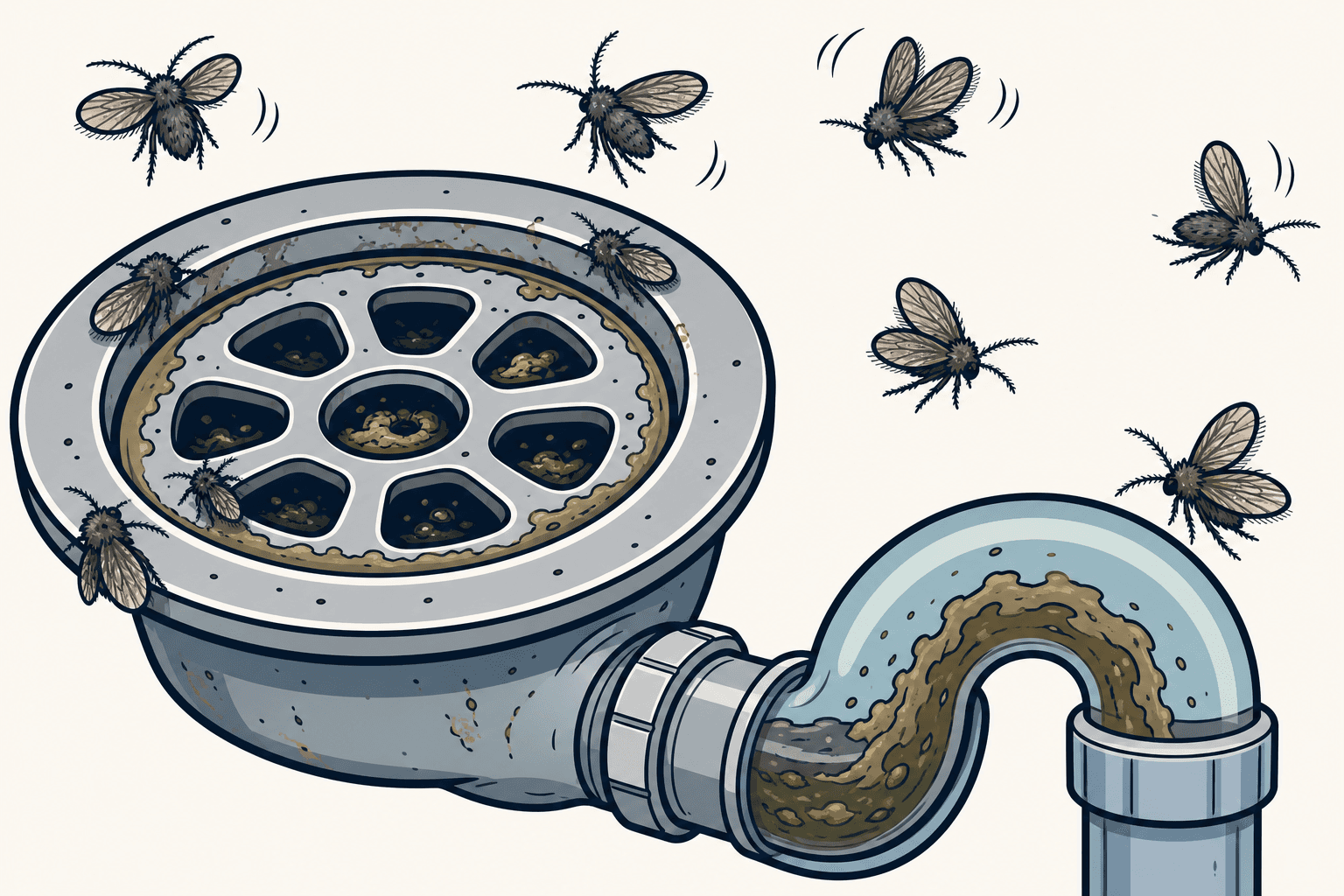
Drain flies are the tiny, fuzzy flies that sit on the bathroom wall and hop more than they fly. People also call them drain gnats or moth flies, and they come from one place: the slimy film inside a drain. Swat the adults and new ones keep coming. Clean the film out and they stop, usually within a couple of weeks.
First make sure that is what you have. Drain flies have fuzzy, moth-like wings and sit near sinks, tubs and showers. Fruit flies hang around fruit and the trash. Small dark gnats around houseplants are fungus gnats, which come from wet potting soil, not from a drain.
Find the Drain They Come From
- 1Note where the flies rest. They stay close to the drain they came from, usually on the wall or the mirror next to it.
- 2Stick clear tape over each suspect drain opening, sticky side down, and leave it overnight, the test Virginia Tech's extension recommends. Flies stuck to the underside tell you which drain it is.
- 3Check drains that are rarely used: a guest bathroom, a basement floor drain, a tub nobody bathes in. Their water seal can dry out, and the film grows unseen.
- 4Do not forget the overflow hole near the top of a bathroom sink, and the drain pan under the fridge, which the University of Kentucky lists as a breeding site.
- 5Notice whether the drain is also slow or smells. A slow drain holds more sludge, so clearing the clog is part of the cure; see bathroom sink draining slowly.
No bleach, no insecticide, no mixing
Virginia Tech's extension advises against pouring bleach or vinegar down a drain to control drain flies, and the University of Kentucky says not to pour insecticides into drains. Never mix drain cleaners or cleaning chemicals. If drain cleaner went in and water still stands, stop here and call a plumber; do not plunge, open the trap or put a brush in.
1. Scrub the Drain Walls With a Stiff Brush
The eggs sit in a gelatinous film on the walls of the drain and the overflow pipe. Virginia Tech calls scrubbing that film out with a stiff brush the most effective method, and nothing you pour down replaces it.
- 1If drain cleaner went in and water still stands, stop here and call a plumber; do not plunge, open the trap or put a brush in. Otherwise put on rubber gloves.
- 2Take out the stopper or the strainer. Most bathroom sink stoppers lift out or come free with a quarter turn; some are held by a rod under the sink.
- 3Push a stiff drain brush down the opening and scrub the pipe walls as far as it reaches, turning it and pulling it up and down. Wipe the slime off the brush onto a paper towel as you go.
- 4Clean the stopper or the strainer separately. The underside is often the worst part.
- 5Flush the drain with hot tap water for a minute or two.
- 6Repeat every few days for about two weeks. The University of Kentucky puts the life cycle at about 10 to 15 days at room temperature, so eggs already laid keep hatching for a while.
2. Clean the Sink Overflow
Most bathroom sinks have an overflow hole under the rim that leads into the drain. It stays damp, nobody cleans it, and the film grows there just as well.
- 1If drain cleaner went in and water still stands, stop here and call a plumber; do not plunge, open the trap or put a brush in.
- 2Push a narrow bottle brush into the overflow hole and scrub as far as it goes.
- 3Pour a cup of hot tap water into the overflow to rinse it.
- 4Do this every time you scrub the main drain, or the flies come back from here.
3. Shower and Tub Drains
Hair and soap scum build the thickest film of all, so shower drains are a common source. If the water also drains slowly, clear the hair at the same time, see shower drain clogged.
- 1If drain cleaner went in and water still stands, stop here and call a plumber; do not plunge, open the trap or put a brush in.
- 2Unscrew or lift the drain cover, and pull out hair with gloved fingers or a plastic hair snake.
- 3Scrub the walls of the drain with the stiff brush as far as it reaches.
- 4On a tub, clean the overflow plate too: remove its screws, lift the plate and scrub behind it.
- 5Flush with hot tap water and refit the cover and the plate.
4. Kitchen Sink and Garbage Disposal
A kitchen drain collects grease and food, which feeds the same film. A disposal adds a rubber splash guard that almost nobody cleans.
- 1Switch the garbage disposal off at its wall switch and unplug it or turn off its breaker before any hand or brush goes near the sink opening or under the sink.
- 2If drain cleaner went in and water still stands, stop here and call a plumber; do not plunge, open the trap or put a brush in.
- 3Lift the flaps of the rubber splash guard and scrub them, top and underside, with an old toothbrush. Never reach down into the disposal chamber.
- 4On a sink without a disposal, scrub the drain walls with the stiff brush the same way as a bathroom drain.
- 5Wipe the cabinet under the sink dry if it is damp, and look for a slow drip from the pipes, which keeps a breeding spot wet.
- 6Flush with hot tap water. Take your hands and tools out of the sink and the cabinet, then restore power to the disposal.
5. Floor Drains, Unused Drains and the Fridge Pan
Drains that are rarely used dry out and build up film without anyone noticing. They are the usual reason flies come back after a spotless bathroom.
- 1If drain cleaner went in and water still stands, stop here and call a plumber; do not plunge, open the trap or put a brush in.
- 2Scrub the walls of a basement floor drain with the stiff brush as far as you can reach, then pour a bucket of water into it.
- 3Once a week, run water for a minute in every sink, tub and shower nobody uses, and flush unused toilets. That keeps their water seal full.
- 4For the drain pan under the fridge, unplug the fridge first. Pull off the bottom grille and keep your fingers away from the fan behind it.
- 5Slide the pan out if your model allows it and wash it in hot soapy water. If it does not come out, the manual shows how to reach it.
- 6Refit the pan and the grille, take your hands clear, and plug the fridge back in.
🛠️ Tools You Will Need
- •Stiff drain brush - the only thing that actually removes the film where the eggs sit
- •Clear packing tape - the overnight test that shows which drain the flies come from
- •Rubber gloves - the slime is unpleasant and full of bacteria
- •Narrow bottle brush - for the sink overflow hole
- •Flashlight - to see the film and the stopper underside
Pro tip
A cup of vinegar with a drop of dish soap catches some adults while you clean, and it shows you whether the numbers are going down. It is a counter, not a cure: the flies stop when the film in the drain is gone.
6. When They Keep Coming Back
If you scrubbed every drain for three weeks and flies still show up, the source is probably somewhere a brush cannot reach.
- 1A cracked drain pipe under the floor or behind a wall can leak into the soil or the wall cavity, and flies breed there. A plumber can find it with a camera.
- 2A basement floor drain or sewer line that is dirty deeper than the brush reaches needs a plumber's cleaning.
- 3A sewer smell in the room together with the flies points the same way.
- 4Pest companies treat drain flies too; Fixr puts a professional treatment at about $170 to $260. Ask whether the visit includes finding the source, because a spray does not reach the eggs.
Fix it with AI
Describe what is happening and Fixable's AI finds the cause and gives you every step. Found a video for this? Paste the link and get the diagnosis, the tools and the parts, without scrubbing through the whole video.
Frequently asked questions
How long does it take to get rid of drain flies?
About two weeks if you clean the right drain. The University of Kentucky puts the drain fly life cycle at about 10 to 15 days at room temperature, so eggs laid before you cleaned keep hatching for a while. If new flies still appear after three weeks of scrubbing, you probably missed a drain or a pipe may be broken.
Do I need an exterminator for drain flies?
Usually not. Cleaning the drain is the treatment, and a stiff drain brush costs a few dollars. Fixr puts a professional drain fly treatment at about $170 to $260. Call a plumber instead if the flies come from a floor drain, a cracked pipe or a drain you cannot reach, because that is a repair job.
Will bleach or boiling water kill drain flies?
Not reliably. Virginia Tech's extension advises against pouring bleach or vinegar down a drain to control drain flies and says poured hot water gives only brief relief. Skip boiling water as well, it can be hard on plastic pipe and porcelain. Scrub with a brush, then flush with hot tap water.
Why do drain flies keep coming back?
Because some film was left behind, or another drain is the real source. Check rarely used sinks and tubs, the sink overflow hole, basement floor drains and the drain pan under the fridge. Run water in unused drains every week so they never dry out, and scrub again whenever flies return.
STILL STUCK?
Describe what's broken and Fixable's AI finds the cause and gives you every step. Found a repair video? Paste the link. Or scan the type plate and Fixable answers from the manual, with the page.
Open it in your browser, free to try →Free trial · 6 languages · Cancel anytime
Keep Reading
Low Water Pressure in the House? 7 Causes, Easiest First
Low water pressure has a short list of causes, and the cheap ones come first: a clogged aerator, a valve left half closed, a tired pressure valve. Here is how to tell which one is yours.
No Hot Water in the House? 5 Causes, Easiest First
No hot water anywhere is usually power, gas or the pilot. Cold at one tap only is the faucet. Hot water that runs out fast is the tank. Here is how to tell which, and what you can safely check.