Clogged Toilet? How to Unclog It (Even Without a Plunger)
To unclog a clogged toilet, use a flange plunger with a soft sleeve under the cup. Seal it over the hole, push gently once, then pump hard 15 to 20 times. No plunger? Add dish soap and hot tap water, never boiling, and wait 20 to 30 minutes. If anyone poured in drain cleaner, skip both and call a plumber.

Different model, or still stuck? Describe it in Fixable and get every step for yours.
In this article
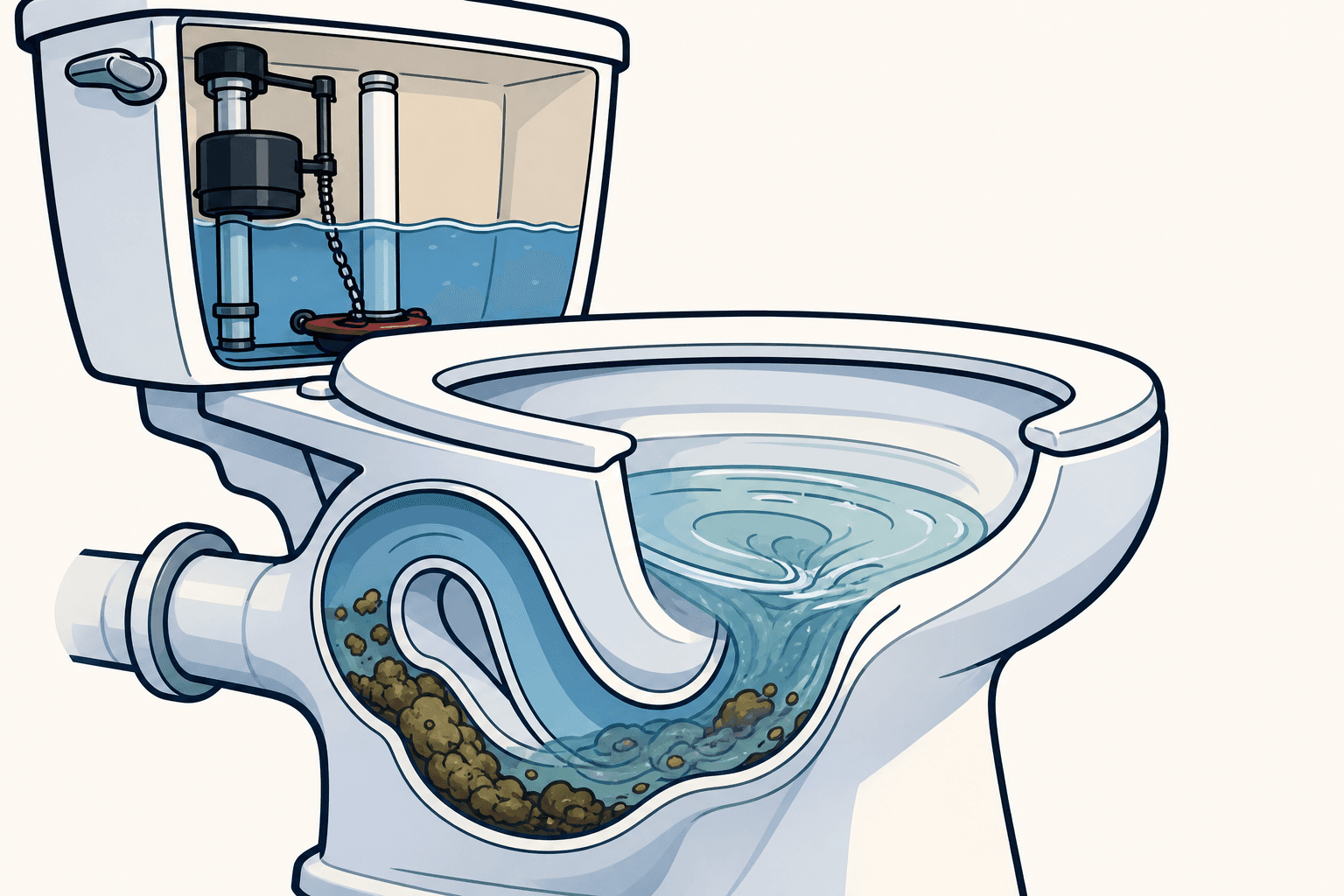
A clogged toilet, or a bowl that fills up to the rim, usually has its clog in the first bend of the trap built into the toilet. You can clear most of them yourself in a few minutes.
First stop the water from rising. If the bowl keeps filling after a flush, take the lid off the tank and push the flapper down, or turn the valve behind the toilet clockwise. Then do not flush again until the water level has dropped.
No drain cleaner and no boiling water
Chemical drain cleaners rarely clear a toilet, and they make plunging dangerous, because the caustic water splashes. Boiling water can crack the porcelain. If someone already poured a cleaner in, do not plunge: call a plumber and tell them what was used.
Start With These 30-Second Checks
- 1Look at the water level. A full bowl that drains slowly means a clog in the toilet or the pipe. A low bowl with a weak flush is more likely a tank problem.
- 2Run a sink or the tub nearby. If those drains gurgle or back up too, the clog is in the main line, and plunging this toilet will not fix it.
- 3Think about what went down: wipes, paper towels, toys and cotton swabs do not break down and often need an auger.
- 4Lift the tank lid and check that the chain is attached to the flapper and that the tank fills up to the line marked inside.
1. Use the Right Plunger the Right Way
A toilet needs a flange plunger: a cup with a soft sleeve that folds out and fits into the drain hole. A flat cup plunger for sinks cannot seal a toilet. One costs around $5.
- 1If anyone poured a drain cleaner in, stop: do not plunge. Call a plumber and name the product. Otherwise turn the valve behind the toilet clockwise, so the tank cannot refill if someone flushes.
- 2Put on gloves and lay old towels around the base. There should be enough water in the bowl to cover the plunger's cup; add some from a bucket if needed.
- 3Put the plunger in at an angle so the cup fills with water instead of air, and seat the sleeve snugly in the hole.
- 4Push down gently the first time to push the air out, then pump hard up and down 15 to 20 times while you keep the seal.
- 5Pull the plunger off sharply. If the water drains, pour in a bucket of water to test, then open the valve again before you flush.
- 6Repeat two or three rounds. A clog that has not moved after that needs an auger.
2. No Plunger? Dish Soap and Hot Water
Soft clogs, mostly paper and waste, often loosen with soap and warm water.
- 1If anyone poured a drain cleaner in, skip this: hot water can make it splash. Call a plumber.
- 2Squirt a good amount of dish soap into the bowl.
- 3Pour in a bucket of hot tap water from about waist height, and stop before the bowl gets too full. Never use boiling water.
- 4Wait 20 to 30 minutes for the soap and the warmth to soften the clog.
- 5If the level has dropped, pour in another bucket of water to test. Flush only once the water drains normally.
3. Use a Toilet Auger
A toilet auger, also called a closet auger, has a short cable inside a bent tube, with a rubber sleeve that protects the porcelain. It reaches past the trap where a plunger cannot, and it pulls out wipes and toys.
- 1If anyone poured a drain cleaner in, stop: do not use the auger. Call a plumber and name the product. Otherwise turn the valve behind the toilet clockwise, so the tank cannot refill if someone flushes.
- 2Put on gloves and set the auger's bent end into the drain hole with the cable pulled back.
- 3Turn the handle clockwise while you push the cable in slowly, until it stops or you feel it catch the clog.
- 4Turn a few more times, then pull the cable back out while you keep turning. Wipes and toys often come out on the end.
- 5Test with a bucket of water, then open the valve again before you flush.
- 6If the cable runs its full length and the toilet still does not drain, the clog is further down the pipe: call a plumber.
4. Weak Flush but No Clog
If the bowl drains but the flush is weak and does not clear the bowl, the problem is how much water reaches it. Look inside the tank.
- 1Lift the tank lid. The chain should have only a little slack, about half an inch, so the flapper lifts all the way.
- 2Check the water level. It should reach the fill line marked inside the tank; if it is lower, adjust the float so the tank fills higher.
- 3Turn the valve behind the toilet clockwise and flush once. Then check the holes under the rim with a small mirror, scrub off any mineral crust with a stiff brush, and open the valve again.
- 4A flapper that drops shut too fast also gives a short flush. Swapping it is the same job as for a running toilet, see toilet runs by itself.
5. A Toilet That Keeps Clogging
A toilet that clogs every few days has a reason, and it is usually not bad luck.
- 1Stop flushing wipes, even ones labeled flushable, and paper towels.
- 2Use less paper per flush, or flush twice for a big load.
- 3Some older water saving toilets flush weakly by design. If yours clogs often and nothing else helps, a newer model can solve it for good.
- 4A toilet that clogs again and again while other drains gurgle points to the drain line or the vent: that needs a plumber.
🛠️ Tools You Will Need
- •Flange plunger - Seals the toilet's drain hole, unlike a flat sink plunger
- •Toilet auger - Reaches clogs past the trap and pulls out wipes
- •Rubber gloves - Hygiene
- •Bucket - Testing the drain without risking an overflow
- •Dish soap - Softens paper clogs when there is no plunger
- •Old towels - Splashes around the base
Pro tip
Keep the plunger next to the toilet, not in the garage. A clog is easiest to clear in the first minutes, before anyone flushes again.
When to Call a Plumber
HomeAdvisor puts a plumber's toilet unclog at about $110 to $275. Call one in these cases:
- 1Several drains gurgle or back up at the same time: the main line is blocked.
- 2Water or sewage comes up in the tub or shower when you flush.
- 3The auger runs its full length and the toilet still does not drain.
- 4Someone poured a chemical drain cleaner in: tell the plumber which product it was.
Fix it with AI
Describe what is happening and Fixable's AI finds the cause and gives you every step. Found a video for this? Paste the link and get the diagnosis, the tools and the parts, without scrubbing through the whole video.
Frequently asked questions
How much does a plumber charge to unclog a toilet?
HomeAdvisor puts a plumber's toilet unclog at about $110 to $275, more when the main line is blocked or the call is after hours. A flange plunger costs around $5 and clears most clogs. Try it first, unless sewage comes up in other drains or someone poured in drain cleaner.
How do you unclog a toilet without a plunger?
Add plenty of dish soap and a bucket of hot tap water, never boiling, and wait 20 to 30 minutes. That softens clogs of paper and waste. Wipes, toys and paper towels do not soften, so those need a plunger or a toilet auger. If anyone poured in drain cleaner, skip this and call a plumber.
Why does my toilet keep clogging?
Usually because of what goes in: wipes, paper towels and big wads of paper. Some older water saving toilets also flush weakly by design. If it clogs often and other drains gurgle or drain slowly too, the problem is further down the drain line or in the vent, and a plumber should look.
What do I do if the toilet is about to overflow?
Take the lid off the tank and push the flapper down to stop more water coming in, then turn the valve behind the toilet clockwise to shut it off. Do not flush again. Once the level drops, plunge with a flange plunger, unless someone poured in drain cleaner: then call a plumber.
STILL STUCK?
Describe what's broken and Fixable's AI finds the cause and gives you every step. Found a repair video? Paste the link. Or scan the type plate and Fixable answers from the manual, with the page.
Open it in your browser, free to try →Free trial · 6 languages · Cancel anytime
Keep Reading
No Hot Water in the House? 5 Causes, Easiest First
No hot water anywhere is usually power, gas or the pilot. Cold at one tap only is the faucet. Hot water that runs out fast is the tank. Here is how to tell which, and what you can safely check.
Mold in Shower Caulk? How to Get It Out and Keep It Away
Black spots in shower caulk are mold, and whether you can scrub them off depends on one thing: are they on the surface or inside the silicone? Here is how to tell, and how to stop them coming back.