Water in the Basement? Find the Source Before You Pay for Waterproofing
Water in the basement after rain usually starts outside. Gutters overflow, downspouts empty at the wall, or the soil slopes toward the house. If water reaches outlets or the panel, stay out until the power is cut. Clean the gutters with someone holding the ladder, extend downspouts (around $11) and fix the grading. HomeAdvisor puts waterproofing at $2,461 to $8,205.

Different model, or still stuck? Describe it in Fixable and get every step for yours.
In this article
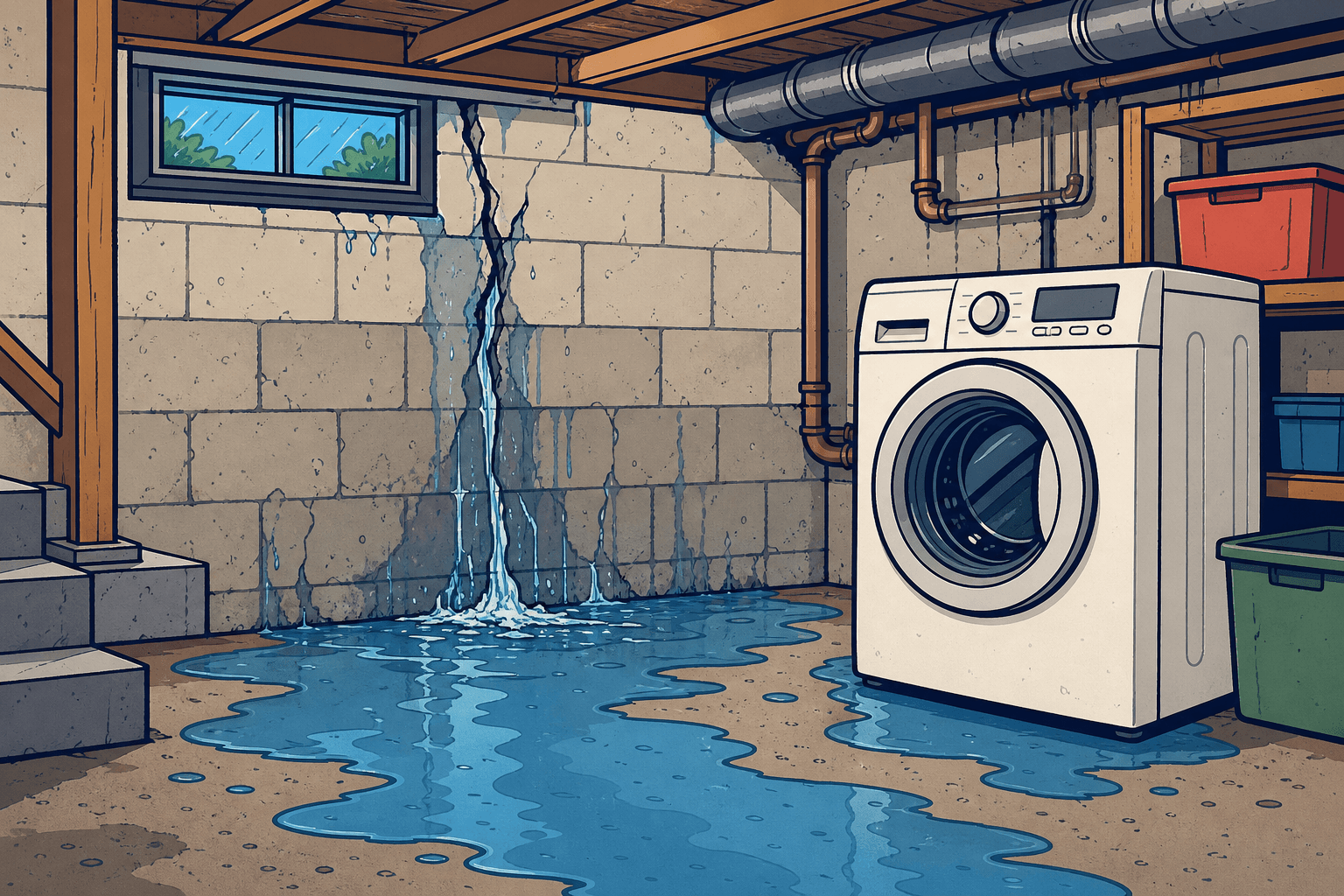
Water in the basement makes people think of cracked foundations and huge bills. Often the cause is much simpler: rain from the roof that is dumped right next to the wall, a leaking appliance, or moisture from the air condensing on cold concrete.
When the water appears is the best clue. Only after rain points to drainage outside. All the time, even in dry weather, points to plumbing or an appliance. Damp walls on humid summer days, with no puddles, often mean condensation.
Stay out of standing water near power
Do not walk into a flooded basement if the water could reach outlets, extension cords, appliances or the electrical panel. If you cannot reach the panel from a dry spot, call your utility or an electrician to cut the power. A gas water heater or furnace that stood in water must be checked by a technician or your gas company before you use it; do not relight it yourself. Water from a floor drain or a toilet may be sewage: wear gloves and boots.
Once the power is off, or the water is well away from outlets and cords, get it out with a wet vac plugged into a GFCI outlet in a dry spot. Then dry the room with fans and a dehumidifier. If the water may be sewage, leave the cleanup to a pro. Before the power goes back on, have an electrician check anything electrical that stood in water. The EPA says materials dried within 24 to 48 hours usually do not grow mold.
Start With These 30-Second Checks
- 1Note when the water shows up: during or after rain, after laundry or a shower, or all the time.
- 2During a steady rain, but never in a thunderstorm, walk around the house with an umbrella. Watch where the gutters overflow and where the downspouts empty.
- 3Look at the water heater, the washing machine hoses, the sump pump and the pipes along the ceiling for drips or rust trails.
- 4Dry a spot on the wall with a cloth, tape a square of aluminum foil about a foot wide over it, sealed on all four sides, and leave it for 24 to 48 hours. Water on the room side means condensation; water behind the foil means moisture coming through the wall.
1. Clean the Gutters and Extend the Downspouts
A roof sheds a lot of water in a storm. If the gutters overflow or the downspouts empty right at the foundation, that water soaks down along the wall and into the basement. This Old House advises fixing the drainage first, before any waterproofing.
- 1Clean the gutters from a stable ladder with someone holding it, or have it done, so the water reaches the downspouts instead of spilling over the edge.
- 2Check that each downspout is connected and clear: run a garden hose into the top and watch the water come out at the bottom.
- 3Add an extension or a splash block so the water lands several feet away from the house. A flexible extension costs around $11.
- 4After the next rain, check the basement again before you spend any more money.
2. Fix the Grading Around the House
The ground next to the house should slope away from it. The International Residential Code asks for a fall of at least 6 inches within the first 10 feet. Soil that has settled against the wall, or a flower bed that slopes toward it, sends rain straight to the foundation.
- 1Lay a long straight board on the ground, pointing away from the wall, put a level on top and see which way the soil falls.
- 2Where it slopes toward the house, add soil against the wall and pack it down so it falls away from the house. Leave at least 6 inches of the foundation wall showing, so the soil never touches the siding.
- 3Pull back mulch or flower beds that hold water against the wall.
- 4Check that window wells drain and have covers. A window well that fills up empties straight into the basement.
3. Find a Plumbing or Appliance Leak
Water that appears in dry weather comes from inside. In a basement, the usual suspects are the water heater, the washing machine and the pipes overhead.
- 1Check the floor around the water heater and the valve on its side, see water heater leaking.
- 2Look at the washing machine's hoses and at the floor under it after a wash, see washing machine leaking water.
- 3Follow the pipes along the ceiling with a flashlight and look for drips, green or white crust and rust trails.
- 4Read the water meter, use no water at all for two hours, then read it again. If the numbers moved, water is leaking somewhere in the plumbing.
4. Test the Sump Pump
If the basement has a sump pit, its pump keeps groundwater out. A pump that fails in a storm floods the basement fast, so test it before the wet season.
- 1If water covers the floor near the pit or the outlet, stop and have the power cut at the breaker first. Otherwise, standing on a dry floor with your hands out of the pit, check that the pump is plugged in and press the outlet's reset button if it has one.
- 2Pour a bucket of water slowly into the pit. The float should rise, and the pump should start and empty the pit.
- 3If it hums without pumping, or does not start at all, unplug it before you reach into the pit or touch the float, and take your hands out of the pit before you plug it back in.
- 4Go outside and check that the discharge pipe is clear and drains away from the house.
- 5An old pump that struggles is worth replacing before the next storm season.
5. Condensation on Cold Walls
On humid summer days, warm air meets the cool basement walls and pipes, and water forms on them. It looks like seepage, but it comes from the air.
- 1Use the foil test from the quick checks to confirm it.
- 2Run a dehumidifier and keep the basement windows closed on humid days.
- 3Wrap cold water pipes with foam pipe insulation so they stop dripping.
- 4Make sure the dryer vents to the outside, not into the basement.
🛠️ Tools You Will Need
- •Flashlight - Pipes, corners and rust trails
- •Aluminum foil and tape - Telling condensation from seepage
- •Garden hose - Testing downspouts
- •Level and a long board - Checking the slope of the soil
- •Wet vac and fans - Drying the floor quickly
Pro tip
Take photos of the basement and of the gutters and downspouts during every heavy rain. When a contractor comes, the pictures show where the water really gets in.
When to Call a Pro
HomeAdvisor puts basement waterproofing at about $2,461 to $8,205, with an average of $5,245. Get two or three quotes, and ask each contractor where they think the water comes from. A pro is the right call when:
- 1Water comes through cracks in the wall or the floor in every rain, even with clean gutters and good grading.
- 2Water rises up through the floor, which points to high groundwater.
- 3Sewage comes up through a floor drain: call a plumber, and do not use the drains until it is fixed.
- 4You see wide cracks, a bowing wall, or doors upstairs that suddenly stick: have a structural engineer look.
Fix it with AI
Describe what is happening and Fixable's AI finds the cause and gives you every step. Found a video for this? Paste the link and get the diagnosis, the tools and the parts, without scrubbing through the whole video.
Frequently asked questions
How much does it cost to fix water in the basement?
It depends on where the water comes from. Downspout extensions cost around $11, and cleaning gutters or regrading soil is mostly your time. HomeAdvisor puts basement waterproofing at about $2,461 to $8,205, with an average of $5,245, so check the drainage outside first.
Why is my basement wet after it rains?
Usually rain from the roof or the yard ends up against the foundation: gutters overflow, downspouts empty right next to the wall, or the soil slopes toward the house. The water then seeps in where the wall meets the floor or through small cracks.
Can I waterproof my basement myself?
You can fix the outside drainage yourself: clean the gutters with someone holding the ladder, extend the downspouts and regrade the soil. Waterproof paint on the inside walls helps only with light dampness. Water that comes through cracks in every rain, or up through the floor, needs a contractor and a drainage system.
Is water in the basement dangerous?
It can be. Stay out of standing water near outlets, cords or the panel until the power is cut. Have a technician check a flooded gas water heater or furnace before use. Floor drain water may be sewage: wear gloves and boots and leave that cleanup to a pro. Dry everything else within 24 to 48 hours to stop mold.
STILL STUCK?
Describe what's broken and Fixable's AI finds the cause and gives you every step. Found a repair video? Paste the link. Or scan the type plate and Fixable answers from the manual, with the page.
Open it in your browser, free to try →Free trial · 6 languages · Cancel anytime
Keep Reading
Peeling Paint? 5 Causes and How to Fix It for Good
Paint that peels or bubbles has a reason, and repainting without fixing it brings the same flakes back. Here is how to find the cause, stay safe around old paint, and repair it properly.
Floor Squeaks in One Spot? 6 Fixes That Actually Work
A floor squeaking in one spot is rarely a sign of damage. Almost always it is two pieces of wood rubbing where a nail used to hold them tight. Here are six fixes in order from easiest to most permanent.